
What Color Dock Lights Attract Fish? Green, Blue and White
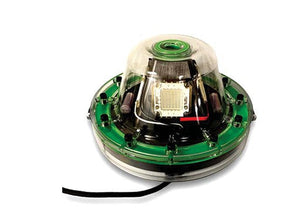

Green underwater dock lights are a practical first choice for attracting fish at night. Blue and white fishing lights can also attract fish; no color works best for every species or body of water. Water clarity, the fish already present, light intensity, depth, and placement all affect what happens around your dock.
If you want one color to start with, consider a green underwater light and evaluate it at your location. Blue is also worth considering, especially if that is the waterfront appearance you prefer. Choose an appropriate submersible system first, then judge the result across several comparable evenings.
Green vs. blue vs. white dock lights
| Color | When to consider it | What to keep in mind |
|---|---|---|
| Green | A practical first choice for a dedicated dock fishing light | A common commercial recommendation, not a universal biological winner |
| Blue | A blue waterfront appearance and an alternative worth evaluating, particularly in clear water | Some fish respond strongly to blue; performance cannot be predicted from color alone |
| White | General underwater viewing with a broad spectrum of visible light | Can illuminate feeding opportunities, but is not proven inferior or superior for every species |
| Red or amber | A specific visual effect or a species-specific application | Not our default for a general underwater fish-attraction purchase; do not assume fish cannot see these colors |
Incredible Underwater Lights recommends blue or green for attracting marine life. That is useful product guidance, but it should not be confused with a guarantee of more fish or a larger catch. Manufacturer reference: Incredible Underwater Lights color guidance.
Do green lights attract fish—and why?
Yes, green fishing lights can attract fish, but the response varies by species and conditions. A light changes the feeding and visibility conditions around a dock. Some fish approach illuminated areas directly; others may follow smaller prey that gather there. Predators may use the edge between light and darkness instead of staying in the brightest center. The result depends on which animals are present and how they respond.
Think of the light as a way to concentrate activity or make it easier to observe. It cannot create fish where suitable habitat and fish populations are absent. A visible school of baitfish also does not guarantee that a game fish will take a lure.
Green vs. blue fishing lights: which attracts more fish?
Not in every situation. In a 2022 field study of white-edged rockfish, researchers recorded more fish and longer residence times under blue LEDs than under green or red LEDs. That result supports blue for the species and conditions studied; it does not establish the best color for bass, crappie, snook, or every residential dock. Tomiyasu and colleagues, Journal of Marine Science and Technology–Taiwan.
Our recommendation of green as a starting point is a practical buying recommendation. The stronger scientific conclusion is that fish response varies. If a blue light performs well at your dock, changing to green solely because of a blanket “green is always best” claim may accomplish little.
Green vs. white fishing lights
For a dedicated dock fishing light, green is our starting recommendation. White is worth considering when you prefer a broad-spectrum underwater view. The rockfish study above did not test white, so it cannot establish a green-versus-white winner. Choose the visual effect you prefer, then evaluate fish activity under comparable conditions.
Why water clarity matters
Water changes the spectrum and reach of light. NOAA explains that blue penetrates ocean water more effectively than red, which is filtered out more quickly with depth. That general principle helps explain interest in blue and green underwater lighting, but it does not predict the winning color in every shallow, stained, or sediment-filled dock basin. NOAA’s explanation of light and color underwater.
Evaluate the actual conditions at your property. Clear water, algae, sediment, tide, and runoff can change the visible effect. A larger advertised lumen number alone cannot guarantee a larger useful fishing area or more fish.
Freshwater vs. saltwater: does the best color change?
There is no dependable rule that freshwater always calls for green and saltwater always calls for blue. A clear freshwater lake and a turbid coastal canal illustrate why salinity alone is an incomplete guide. Consider the target species, local water clarity, depth, and bait activity together.
Product suitability is a separate question. Incredible’s Apollo and Mega-Watt systems are offered for both freshwater and saltwater use. Confirm the exact model’s specifications when ordering. A general outdoor deck light should not be treated as an underwater fishing light simply because it is described as waterproof. Manufacturer’s Apollo specifications.
Check coastal wildlife requirements before choosing a color
Fish-attraction goals do not establish suitability near a sea turtle nesting beach. Review the site’s requirements before installing green, blue or white fishing lights. For separate above-water lighting, see turtle-friendly amber lighting options; these products are not automatically suitable for underwater use.
Choosing underwater fishing lights for your dock

- Start with green: the green Apollo with a 40-foot cord is one option to compare for a dedicated underwater dock installation.
- Need a longer route? Compare the 80-foot and 120-foot Apollo versions before choosing.
- Prefer blue? See the blue Mega-Watt system. Compare the complete model’s output and installation requirements, not just its color.
- Want both colors in the display? The blue/green Apollo IRIS displays two colors simultaneously. That is an appearance option, not proof of better fishing.
These Incredible systems use a supplied 24V DC driver powered from a 110–120V AC outlet. Choose the matched system and factory cord; do not substitute a landscape-lighting transformer just because both systems are described as low voltage. Power and cord details.
Placement can matter as much as color
- Choose a useful observation and fishing area. Keep the light and its cord clear of boat traffic, propellers, lifts, and fishing access.
- Follow the selected light’s depth instructions. Account for low water, tides, and dock movement. Keep the light submerged as required and accessible for maintenance.
- Watch the edge of the illuminated area. Look beyond the bright center when observing baitfish and larger fish. Note where activity actually occurs rather than assuming every fish will sit over the light.
- Compare like conditions. Record clarity, tide or water level, weather, start time, and visible fish activity. Changing several variables at once makes a color comparison unreliable.
- Keep the light clean. Inspect it according to its maintenance instructions. Buildup and changing water conditions can alter the effect even when the fixture has not changed.
Allow time for observation, but be skeptical of exact promises such as “fish will arrive in 15 minutes.” Some evenings may produce little activity regardless of color. There is also no universal requirement to leave a fishing light on all night; set operating hours around your use and applicable local requirements.
Keep fishing light and walking light separate
The best color for enjoying fish below the dock is not necessarily the best light for seeing a step above it. Use warm, shielded deck lighting for the walkway and a purpose-built submersible light for the water. Our dock lighting guide shows how recessed Lumien Micro assemblies and underwater systems can work in the same overall plan.
Have a qualified dock electrician verify the power supply and required protection. Disconnect the underwater system before handling or servicing it, and follow the manufacturer’s instruction not to operate the light out of water. Follow local fishing and waterfront-lighting requirements. Incredible installation guidance; ESFI waterfront electrical safety guidance.
Keep a dock-light observation log
Use the same observation period across several evenings before deciding that a different color is needed. This is a practical comparison record, not a controlled experiment or a guarantee of catches.
| Record | Why it helps |
|---|---|
| Date, start time and time since switch-on | Separates a quick glance from a longer observation. |
| Water clarity, depth and current or tide | Helps explain why the same light looks or performs differently between evenings. |
| Light color, position and setting | Avoids attributing a change in placement or brightness entirely to color. |
| Baitfish sightings, larger fish and catches—separately | A visible baitfish gathering is different from a landed target fish. |
If conditions or several settings change together, record that limitation. Keep the installation within the light’s instructions throughout the comparison; do not move powered underwater equipment to experiment.
Dock fishing light FAQs
What color dock light should I buy to attract fish?
Green is a reasonable starting point. Blue and white are alternatives, and the best result depends on your fish species, water conditions, and placement. Buy a correctly rated underwater system before focusing on color.
How long does it take underwater lights to attract fish?
There is no reliable arrival time. Watch for baitfish and larger fish over several comparable evenings, noting water clarity, tide or water level, and when the light was switched on. A quiet evening alone does not establish that the color is wrong.
Do green dock lights work during the day?
The visible contrast of an underwater light is generally easier to appreciate after dark. A light’s daytime usefulness depends on ambient light and conditions; do not assume nighttime performance carries over unchanged.
Will a brighter underwater light attract more fish?
Not necessarily. More output is a different lighting choice, not a promise of greater fish activity. Compare output, depth, clarity, placement, and the behavior you observe.
Will a dock light attract a specific species?
It may help reveal or concentrate activity where that species already occurs, but no general-purpose dock light guarantees bass, crappie, snook, tarpon, or any other target fish.
Is a blue/green light better than a single color?
A two-color system creates a different underwater display. It has not been established here as superior for attracting fish. Choose it for the effect you want and evaluate it under your local conditions.
Choose a light for your dock and your water
Start with a suitable underwater fixture, the correct cord length, and a sensible placement. Then choose green, blue, or another available color based on your goals and observations. Browse dock lighting options, and use our dock lighting planning guide to coordinate the water and walkway lighting.
- Jenny Branch