
CAST Landscape Lighting: Quality, Value & Coastal Use
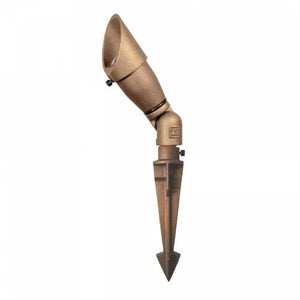

CAST landscape lighting is a strong choice for owners who prioritize substantial bronze construction, serviceable fixtures, and a natural finish that develops a patina. Its bronze models deserve particular consideration for coastal gardens, permanent residential landscapes, and professionally specified projects.
But which CAST fixture should you buy, and is the premium worthwhile? Start with the material, then check the light distribution, mounting, replaceable parts, and warranty. This guide connects those details to real purchasing decisions. Recommendations are based on published specifications and product documentation, rather than a comparative field test.
Who should buy CAST landscape lighting?
| Buyer or project | Why CAST deserves consideration | What to check first |
|---|---|---|
| Coastal homeowners | Bronze construction and naturally weathering surfaces suit a durability-focused material strategy | Salt exposure, installation location, and transformer protection |
| Owners investing in a permanent landscape | Substantial fixtures and model-specific service parts support long-term ownership | The complete installed cost and future service plan |
| Landscape architects and lighting designers | Documented construction, optical choices, and photometric resources support specifications | The exact model’s distribution, output, listings, and accessories |
| Professional installers | A choice of serviceable lamp-based and integrated fixtures supports different job requirements | Access for adjustment and replacement components |
| Owners who like natural bronze | Patina lets the hardware evolve with stone, planting, and other outdoor materials | Whether changing color is welcome in the design |
CAST is less compelling if the only objective is the lowest initial price or a temporary lighting effect. Buyers who require a particular control system, a very small fixture, or an exact permanent finish should compare those requirements model by model. The right purchase starts with the project, not the logo.
What makes CAST Lighting tough?
CAST’s Bronze Series uses solid sand-cast bronze for key fixture components. That describes the material of the component itself. A product elsewhere described as “bronze finish” may instead have a different base metal under a decorative finish, so check construction rather than relying on the color name.
CAST describes its bronze manufacturing as a sand-casting process and offers fixtures intended for professional landscape design. Its current product range also includes a Brass Series, so the solid-bronze story should not be applied indiscriminately to every item bearing the CAST name. CAST manufacturing and design overview; current product families.
Look inside a specific fixture
The CAST CBL1CB Classic MR-16 Bronze Bullet Spotlight shows what a detailed construction specification looks like:
| Documented component | Why a buyer should care |
|---|---|
| Bronze body, shroud, knuckle, and stake | The material commitment extends beyond the visible outer shell |
| Silicone O-rings and borosilicate glass lens | Sealing and lens construction are identifiable, serviceable details |
| Ceramic socket with nickel contacts | The electrical interface is specified rather than hidden behind a general quality claim |
| Tin-coated No-Ox wiring and protected internal connections | The conductor and connection design receive attention alongside the housing |
| Long shroud and adjustable knuckle | Durability is paired with aiming and glare-control tools |
These are CBL1CB features, not a checklist assumed for every CAST fixture. Consult the manufacturer’s model specifications for the complete construction and installation details.

Craftsmanship includes the parts people rarely notice
A path light needs a dependable stem and mounting arrangement as well as an attractive hat. CAST’s CCH1CB Small China Hat Path Light combines bronze components with a heavy-gauge copper stem. The manufacturer also documents its wiring, socket, mounting details, and available photometric information. CCH1CB specifications.
This is a useful way to judge craftsmanship: ask whether the fixture is thoughtfully built all the way down to the stake, connection, and service access. Weight alone does not establish optical quality, electrical reliability, or suitability for a particular site.
Is CAST Lighting a good choice for coastal locations?
CAST’s bronze fixtures deserve a place on the shortlist for coastal landscape lighting. Corrosion resistance is one reason to consider bronze where salt air and moisture are recurring concerns. CAST specifically discusses bronze’s seawater-corrosion resistance in its bronze outdoor lighting guidance.
Think about the whole installation. A fixture beside a sheltered courtyard experiences different exposure from one near breaking surf. Drainage, wind-driven spray, irrigation, cable routing, and maintenance access all belong in the selection process. A corrosion-resistant housing does not turn an above-ground landscape light into a submersible fixture.
Protect the transformer as carefully as the fixtures
CAST’s warranty requires transformers within 1,000 feet of saltwater to have suitable protection from salt spray, such as an appropriate enclosure or building location; cabinet salt-spray damage is excluded. Coordinate protection, ventilation, and mounting with the installation instructions. Read the coastal transformer conditions.
For a coastal project, ask the installer to review fixture placement, exposed electrical connections, the power-supply location, and access for inspection together. Choosing premium fixtures is most useful when the rest of the system receives the same care.
Patina is part of the appeal
Natural bronze changes appearance outdoors. For an owner who wants landscape hardware to blend into planting beds and weathered stone, that gradual change can be a benefit. For someone expecting a permanently identical factory color, it needs to be discussed before ordering.
CAST also explains that a whitish surface deposit can occur as zinc in its bronze migrates to the surface. This is not automatically evidence of a failed fixture. Follow the manufacturer’s guidance for the exact product before attempting cleaning or finish treatment. CAST’s patina and surface-appearance FAQs.
A changing surface color and a failing electrical component are different issues. Inspect loose hardware, damaged seals, flickering lamps, and exposed connections separately from cosmetic patina.
Why CAST belongs on a landscape architect’s shortlist
For a landscape architect or lighting designer, a durable fixture is one part of a larger specification. The design also needs predictable light distribution, controlled glare, a suitable color temperature, mounting flexibility, and a service plan the owner can maintain.
CAST provides specification sheets and optical data for selected products. For example, its Craftsman spot-light page offers IES files and LM-79 reports, while the CCH1CB page includes photometric resources for a stated module configuration. These documents help a designer evaluate an actual fixture and light source instead of relying only on catalog photography. Craftsman technical resources.
“Specification grade” is useful shorthand for professional project requirements, but it is not a substitute for checking the exact product. A strong specification should identify:
- Fixture and light source: exact model, lamp or module, output, and color temperature.
- Optics: beam distribution, aiming position, glare control, and relevant photometric file.
- Construction and exposure: housing materials, seals, installation location, and applicable listing.
- Electrical system: operating requirements, transformer, load, cable, and approved controls.
- Ownership: replacement components, access for servicing, and applicable warranty terms.
For commercial landscapes, also specify mounting positions outside routine mower and pedestrian contact, identify maintenance access, and record replacement part numbers. A substantial fixture still needs a suitable location and support. For architects, this documentation makes a stronger specification than simply requesting a premium brand.
Serviceability: quality after the first installation
A fixture can outlast its original lamp. For a lamp-based model such as the CBL1CB, being able to select and replace the MR-16 is part of its appeal. CAST also publishes socket-replacement instructions and lists service components for that model. CBL1CB parts and support.
Integrated LED does not automatically mean that every service procedure requires replacing the whole fixture. CAST publishes an LED-module replacement video for its Craftsman integrated bullet lights. Confirm the applicable replacement part and procedure for the model being purchased. Craftsman module-service resources.
For a long-term owner, the useful question is: “If the light source or a wear component fails, what can the installer replace?” Ask that before purchase, along with current parts availability. Do not assume that documentation guarantees every spare will remain available indefinitely.
CAST Lighting warranties: read by component
The current CAST limited warranty separates coverage by component:
| Component | Published coverage |
|---|---|
| Sand-cast bronze castings and copper stems | Lifetime |
| CAST Landscape integrated LEDs and modules | 10-year extended coverage, subject to approved equipment requirements |
| MR-16 LED drop-in lamps | 5 years |
| Listed miniature LED lamp types | 3 years |
| Transformer windings and SS-series enclosures | Lifetime, subject to exclusions |
| Transformer electrical components, photocells, and timers | 3 years |
Coverage is for the original purchaser under stated conditions; removal and reinstallation labor are excluded. Non-approved transformers or dimmers void LED coverage. SOURCE families and certain modules have different terms. Confirm the exact model, approved power supply, controls, and invoice documentation before purchase.
A long housing warranty and a long service life are different concepts. Evaluate the complete system and retain a clear record of what was installed.
Which CAST landscape lights should you choose?
Choose the lighting effect first, then select the construction and service approach. These recommendations distinguish modest accents from broader coverage and separate a replaceable lamp from a serviceable integrated module.
| Fixture | Best reason to consider it | Selection detail |
|---|---|---|
| CBLED141 Classic LED Bullet | A new bronze uplighting installation needing adjustable output and interchangeable optics | 269/328 delivered lumens; 41° optic included; 21° and 12° purchased separately |
| CBL1CB Classic MR-16 Bullet | A lamp-based specification or matching an existing Classic installation | Select the compatible MR-16 separately; CAST points new LED installations toward CBLED141 |
| CCSL10536B Craftsman 36° | A small, defined planting or architectural accent | 89 fixture lumens and 358 center-beam candela in the published specification |
| CCSL18354B Craftsman 54° | A broader shrub or planting group at a modest throw distance | 153 fixture lumens and 238 center-beam candela in the published specification |
| CCH1CB Small China Hat | A traditional path-light form with bronze components and a copper stem | Check the specified light source and its distribution before setting spacing |
| CCPLCABL Craftsman Cabana | A path-light design with a replaceable bi-pin lamp | The final L identifies the drop-in version; distinguish it from integrated CCPLCAB |
Sources: Classic LED specifications, Craftsman specifications, and Cabana options. The Craftsman page uses 105/183-lumen descriptions in its feature list but gives the lower delivered fixture outputs shown above in its detailed specifications. Use the applicable photometric data when designing.
For new uplighting: start with CBLED141
The CBLED141 combines a replaceable LED module with two output settings and interchangeable optics. A narrower optic can concentrate light on a slender architectural feature; the included wider optic suits a broader target. Its published electrical load is 6.3 VA on low and 9.84 VA on high. Size the system for the intended setting, and check approved transformer and dimmer combinations.
CAST explicitly says this model is not a downlight. For a tree-mounted moonlighting design, select a fixture intended for that orientation. Its installation and product documentation should guide final selection.
For restrained accents: choose the Craftsman beam deliberately
More lumens do not always mean a brighter center spot. The 36° model concentrates its lower total output into a narrower distribution; the 54° model spreads more light across a wider area. That makes the former worth considering for a defined focal point and the latter for a broader planting mass. Neither should be selected for a tall, distant canopy merely because its bronze housing is substantial.
For illustration, a nominal 36° beam at a 10-foot throw spans about 6.5 feet; a 54° beam spans about 10.2 feet. These geometric estimates use diameter = 2 × distance × tan(beam angle ÷ 2). They are not uniform illumination boundaries: aiming, foliage, the actual photometric distribution, and spill light change the result. Check the nighttime effect before committing to every fixture location.
CAST bronze vs. brass: compare the complete fixture
A useful comparison exists within CAST’s own range. The CBL1CB bronze bullet and SBL20 brass bullet both accept an MR-16, but their construction packages differ.
| Detail | CBL1CB Classic | SBL20 Brass Series |
|---|---|---|
| Housing | Sand-cast bronze | Brass with aged-brass finish |
| Included ground stake | Bronze | Brown plastic |
| Light source | Replaceable MR-16 | Replaceable MR-16 |
| Design decision | Consider when bronze construction extending to the mount is a priority | Consider when brass construction and the supplied mounting arrangement fit the project |
See the CBL1CB and SBL20 manufacturer specifications. This is a construction comparison, not evidence that one delivers better light with every lamp. Compare equivalent lamps, optics, mounting conditions, and complete installed prices.
The same method applies when comparing CAST with Kichler or another professional brand: identify the actual base metal, included mount, selected lamp or module, control compatibility, and component warranty. A brand name or bronze-colored finish cannot answer those questions. Avoid paying for material weight while overlooking the optical effect the project needs.
Is CAST Lighting worth the higher upfront cost?
The strongest case is a long-term installation where durable materials, access to service components, and natural weathering match the owner’s priorities. The weakest case is buying a premium housing without confirming that its output, size, or controls fit the job.
Compare a complete bill of materials: fixtures, lamps or modules, optics, mounts, approved power equipment, wire, connectors, and installation. Then ask what a future service visit would involve. A fixture beside a bed edge and one behind dense mature landscaping can have very different maintenance costs. No published housing warranty establishes a guaranteed payback period or a maintenance-free lifespan.
For a coastal courtyard, prioritize exposure, protected connections, and accessible transformer placement. For a small ornamental tree, prioritize the beam and glare control. For a larger commercial landscape, prioritize a repeatable specification and a documented service plan. Those priorities make the premium easier to evaluate.
Keep a durable lighting system performing well
Maintain the light, not just the metal. Remove vegetation that blocks beams, clean lenses according to the model’s instructions, check aiming after landscape work, and inspect accessible connections and mounting points. CAST recommends periodic fixture and transformer maintenance in its maintenance FAQs.
Plan the electrical fundamentals from the beginning. Our wire selection guide, waterproof connector guide, and transformer sizing guide explain key planning considerations. The selected CAST equipment’s instructions and compatibility requirements govern the final system.
Build a coastal maintenance and warranty record
Keep a fixture schedule with the purchase record so the owner can identify components years after installation. A bronze housing, replaceable lamp, integrated module and transformer can have different warranty terms.
| Save at handoff | Practical purpose |
|---|---|
| Fixture model, location and purchase date | Identifies the housing and original installation for parts or warranty questions. |
| Lamp or module and supply/control models | Documents the actual electrical combination, including applicable approved-power requirements. |
| Site exposure and maintenance instructions | Records salt-spray exposure and the required care, rather than treating natural patina as the only coastal concern. |
| Photos and service history | Distinguishes the original condition, routine care and later component replacements. |
Use the June 2026 CAST limited warranty (PDF) for the detailed conditions. A record supports a claim; it does not expand coverage or replace the warranty’s exclusions.
CAST Lighting FAQs
Is CAST Lighting worth the investment?
It can be, especially when substantial bronze construction, a natural patina, and model-specific serviceability match the owner’s priorities. Compare complete installed systems and maintenance access, rather than fixture price alone.
Are all CAST fixtures solid bronze?
No. The catalog includes bronze and brass product families. Check the exact model’s construction, including its stem, stake, and other components.
Does CAST bronze stay the same color?
No. Natural weathering is part of the material’s appearance. Discuss the expected patina before ordering if color consistency is a major design requirement.
Is CAST a good option for a beach house?
Its bronze fixtures are a strong candidate. Review exposure and the complete installation, including the coastal transformer conditions discussed above.
Should I choose a lamp-based or integrated CAST fixture?
Choose around optics, output, controls, and servicing. A replaceable-lamp model offers lamp-selection flexibility; an integrated model needs its own module-service and compatibility review.
Get help choosing CAST fixtures
Send us photos, approximate target dimensions, fixture-to-target distances, and any salt exposure. Include whether you prefer replaceable lamps or integrated modules so we can help narrow the selection.
Browse CAST Lighting products at Atlantic Lighting. Bring the fixture locations, coastal exposure, desired lighting effects, and service priorities so the hardware, light sources, and electrical system can be selected together.
- Jenny Branch