
Pergola Lighting Ideas: Layers, Glare, and Controls
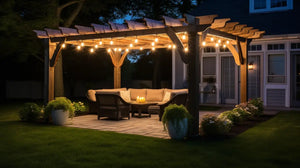

Plan pergola lighting in three layers: enough light to move safely, comfortable light for the table or seats, and decorative light that gives the structure character. One bright overhead source rarely does all three well.
Overhead ambience
String lights can outline the structure or cross above the seating area. Follow the set's support and span requirements. Shielded downlights can keep the ceiling visually quieter, but check glare from every seat. Do not assume a smart fixture includes every dimming or color feature.
Light the table
A suitably rated pendant or cordless table lamp can bring light closer to the activity. Check clearance above the table, stability, and exposure to rain. For rechargeable lamps, plan charging access and check the runtime conditions for the exact model.
Reveal steps and edges
Use suitable deck or step lights where people enter or change level. Test the walking surface from both directions. Decorative lighting around the roof does not necessarily make a step visible.
Check the environment and supply
A pergola is often open to wind-driven rain. Choose equipment rated for the actual conditions, and confirm voltage, controls, and power requirements. Keep wiring protected and accessible according to the installation instructions. Arrange qualified help for line-voltage work.
Test before finalizing
Set up a sample scene after dark and sit in each position. Look for lamps reflected in glass, bright sources at eye level, and dark task areas. Adjust position and shielding before increasing output. Save a comfortable everyday scene and add a brighter task setting only where the equipment supports it.
Match pergola lighting ideas to how you use the space
| Activity | Start with | Check from the seat |
|---|---|---|
| Dinner at a table | A suitably rated table lamp or shielded overhead light | Can you see food and faces without looking into a bright source? |
| Relaxing after dinner | Gentle perimeter or indirect light | Are neighboring windows or reflective surfaces catching glare? |
| Entering from the garden | Dedicated step or deck lighting | Can you distinguish the edge and change in level? |
| Occasional entertaining | Separately controlled decorative light | Can the scene change without making the entry route too dark? |
For a dining pergola, test the table layer first, then the route in and out, and finally the decorative layer. This order avoids buying a long overhead string only to discover that the table remains difficult to use.

What if there is no convenient outlet?
A suitably rated rechargeable lamp can serve the table without a cord across the walking route. Check runtime at the brightness you intend to use and plan where it will recharge. It does not replace permanent step lighting or make a charging base suitable for rain.
Zafferano’s Poldina Pro instructions distinguish the assembled outdoor lamp from the charging arrangement and restrict metallic-leaf versions to indoor use. Apply the instructions supplied with your exact model and finish; outdoor suitability is not a promise for every item in a collection.
Can I use strip lighting under the beams?
Only when the complete system is suitable for the exposure and mounting location. Verify the strip, channels, connectors, driver and controls together. Protect the light source from direct seated views, keep service access, and respect the product’s cutting and maximum-run instructions.
How do I avoid a pergola that feels too bright?
Sit in every chair after dark, including with interior house lights on. Look for exposed lamps and reflections in glazing. Adjust position or shielding before adding output. If dimming is needed, verify compatibility across the complete circuit; a lamp marked dimmable does not qualify an unspecified dimmer.
For overhead routes and length calculations, read outdoor string-light layout planning. For portable light, compare Zafferano lamps and review the specifications for the exact model and finish.
Related guides
Shop for your project
- Kevin Simon